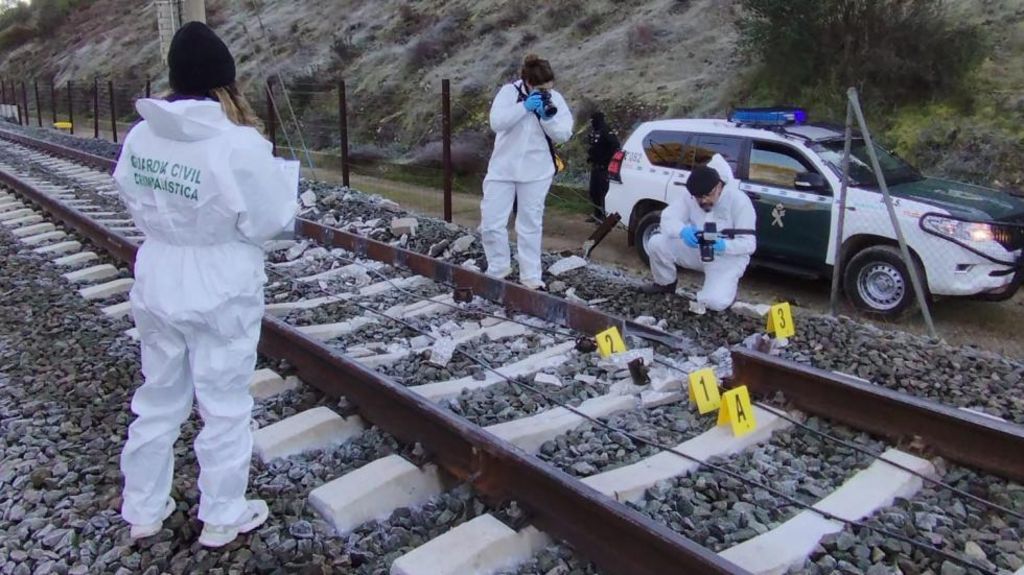
While these events are statistically very rare, it is worth remembering that there have been two separate events in the past twenty years in Spain where high-speed trains have derailed leading to multiple fatalities [1][2]. In contrast, the Japanese Shinkansen has a spotless record since its introduction in the 1960s [3]. Not a single fatality due to a crash or derailment. And that's in a country with a much larger population and much higher passenger count per year.
What do they do differently?
[1] https://en.wikipedia.org/wiki/Santiago_de_Compostela_derailm...
[2] https://en.wikipedia.org/wiki/2026_Adamuz_train_derailments
Short answer: Japan treats high-speed rail as a tightly controlled system, not just fast trains on tracks.
One major difference is infrastructure. Shinkansen lines are completely separate from conventional rail: no level crossings, no shared tracks, no freight, and no interaction with slower services. There are no cars, pedestrians, or animals anywhere near the line. In much of Europe, including Spain, high-speed lines are very good, but they still tend to interact more with legacy rail networks and inherit more constraints.
Another key factor is how strictly operations are controlled. Speed limits are enforced automatically rather than relying on driver compliance alone. If a train exceeds its permitted speed for any reason, the system intervenes immediately. The design assumption is that human error will happen, so the system is built to prevent a mistake from turning into an accident.
Maintenance is also handled with extreme conservatism. Track geometry, overhead lines, and rolling stock are continuously monitored, with very tight tolerances. Components are replaced earlier than strictly necessary because preventing failures is considered far cheaper than dealing with the consequences of one.
Japan has also invested heavily in detecting external hazards. Earthquake early-warning systems automatically cut power and apply brakes before shaking reaches the tracks, and the same mindset applies to weather, landslides, and other environmental risks.
Finally, there’s a strong institutional safety culture behind all of this. Procedures, training, and reporting of near-misses are taken very seriously, and lessons are applied incrementally over decades. The objective isn’t just to meet safety standards but to systematically remove edge cases.
It’s not a single piece of technology that explains the record. It’s the combination of dedicated infrastructure, automation, conservative engineering, obsessive maintenance, and a culture with very little tolerance for shortcuts.
>If a train exceeds its permitted speed for any reason, the system intervenes immediately
That might be because Japan did have a huge railway accident in 2005 due to excessive speed.
https://en.wikipedia.org/wiki/Amagasaki_derailment
> Of the roughly 700 passengers, 106 passengers and the driver were killed, and 562 others were injured
The Santiago de Compostela derailment (first link on the parent comment) happened in 2013 for the same reason.
All that said, I would not be surprised if the culprit for this particular case is lack of maintenance. However I would wait until the official investigation is over before drawing conclusions.
Spanish high speed lines are mostly separate from the legacy network as they have different gauges, there are a few parts of the railway with dual gauge tracks but it is that. The Santiago accident was on the conventional rail.
Just a small clarification, Spain has two distinct track stems for normal trains (Iberian gauge) and high speed rail (international gauge). High speed rail is completely separate from the iberian gauge network which is primarly used for city and regional trains. Only a few cargo trains use the high speed network.
Regarding the second point, 2013 accident was caused by higher than allowed speed and drivers had been complaining about the line not having the security system that automatically enforces speed limits. In this year's accident, the line has a much stricter securty system.
The main issue with spanish rails, high speed and specially traditional rail is the lack of maintenance.
Minor correction: there are two Shinkansen lines in Japan that run trains partly on shared legacy track, namely the Akita and Yamagata "mini-Shinkansens". However, these sections operate at normal speed, not high speed.
> If a train exceeds its permitted speed for any reason, the system intervenes immediately.
Does the system automatically slow down the train, or does it notify the engineer? I would imagine that there are some scenarios where going over the speed limit is the correct choice.
I am not sure what conclusion can we draw from, as you said, two very rare incidents over a long period of time.
Reminds me of when Malaysian airlines crashed two planes in a short period of time. It was a good time to get cheap flights from Europe to south east Asia as long as you can withstand relatives thinking you are literally going to die in their third crash.
Bit of an odd comparison, given that one of those flights (MH17) was shot down by a Russian Buk squad. That was not an issue attributable to the carrier in any way, and after the incident the likelihood of it happening again to Malaysia Airlines specifically was negligible.
It could be prevented by simply not flying over an active war zone, something airlines do all the times to prevent the exact same thing from happening.
Airlines started being more sensitive to this after the 2014 crash
Spain basically does not do the required maintenance:
https://www.reuters.com/world/spains-deadly-rail-accidents-p...
From the linked article:
> [The] stretch of track that was renovated last May and inspected on January 7.
The track had been inspected very recently. Maybe the inspection standards are inadequate?
The linked article also shows figures that are quite meaningless without context.
> [The] vast majority [of Spain's high-speed rail budget] went to new infrastructure with only some 16% earmarked for maintenance, renewal and upgrades. That compares with between 34% to 39% spent by France, Germany and Italy,
They simply can't compare those numbers as-is. Of course Spain will be spending less in maintenance as a percentage of the total budget if it's still mainly building new tracks. It's not a useful figure.
Yep, plus their network is pretty new anyways. Which generally needs less maintenance than older infrastructure.
An component here is the highly unfortunate timing of two trains crossing one another as one of the trains derailed. Both trains look like rigid HSRs, and usually when these derails they stay very stable and rarely have fatalities.
They are two very different accidents: The second was insufficient/poor maintenance: Supposedly the train that checks for this had passed 2 months before, and someone will have to wonder whether it's just not passing often enough, or if the inspections are just poor in general.
The first was purely a matter of not upgrading the signaling in a very low speed section: The crash could have happened with regional trains too. Every engineer knew that it was unsafe and one distraction was enough to get someone killed, but Spain is still well in the middle of track expansion, so it's all the horrors of politicking. Unless you have a crash, not upgrading those signals costs nothing, but, say, the very expensive connection to Asturias was worth a lot, so iffy tradeoffs were made.
Hopefully better engineering-driven tradeoffs are made regarding track maintenance, but hey, this is Spain, not a place where we are good at efficient, reliable safety processes: See the failures in Valencia for the DANA, where the chain between the meteorologists seeing a risk that led to recommending evacuation, and the actual order of evacuation was so slow, so we ended up with 229 deaths.
Track maintenance?
Higher passenger count could imply ability to pass higher maintenance budgets?
I think even more important is the seismic activity in Japan asa risk factor here
Could weather or some other geographic/similar aspect be a factor?
The geographic aspect of russian agents being in vincinity of the traintracks. Week before supply trains in Germany also derailed, as they do once per month.
Perhaps there are less FSB agents blowing up sections of track with shaped charges in Japan.
Yeah funny how instantly top comments are about moving the discussion away from the elephant in the room: russian sabotage against a European nation.
Then you mention fsb and get downvoted.
HN is full of russian shills.
> Santiago de Compostela derailment
Hey that infrastructure looks perfectly fine and new, ahhh ok... they were going 180kmh where the speed limit was 80kmh..
Which is also exactly how the most deadly rail incident in the past half century in japan happened.
I wonder how common it is for train tracks to fracture? And what systems are in place to actually detect this. There was recently a post on a German subreddit where the OP found a fracture in the German rail[0], albeit much smaller.
0. https://old.reddit.com/r/drehscheibe/comments/1qe9ko2/ich_gl...
In November, a bigger missing part of a train track was due to sabotage: https://www.bbc.com/news/articles/cp85g86x0zgo
> I wonder how common it is for train tracks to fracture?
very
> And what systems are in place to actually detect this.
track circuit detection would pick up most cases I would have thought
> I wonder how common it is for train tracks to fracture?
That entirely depends on which class of tracks we're talking about. And on top of that, remember that Europe is at war with Russia, railway sabotage has been attributed to Russia already in Poland [1] - and if you ask me, I don't believe for a single goddamn second that "cable thieves" were the cause behind the infamous 2022 attack on Germany's railways either.
> And what systems are in place to actually detect this.
In Germany, dedicated railway cars called "RAILab" [3] that can measure track performance at up to 200 km/h perform the bulk of the work. In addition, each piece of infrastructure has something called an "Anlagenverantwortlicher", a person responsible for it - and that person has to walk each piece of infrastructure every two years at the very least, sections that have shown to be problematic get walked sometimes weekly.
[1] https://www.bbc.com/news/articles/c4gknv8nxlzo
[2] https://en.wikipedia.org/wiki/October_2022_German_railway_at...
AFAIK continuously welded tracks (like those used in high speed rail) are also slightly tensioned, so a break in a single point could make it look like a whole section of track is missing, as tension is released.
What are the some of the ways that tracks are monitored for fractures like this? It must have been pretty substantial in order to be described as "complete lack of continuity". Makes me think of literally electronic continuity tests -- are those ever used in this context? Or how about cameras mounted on trains using image processing? Or drones?
It seems a shame that a few other trains passed beforehand with this anomaly in place and yet it went undetected.
Measurement trains filled with cameras and LIDAR
For example, in the U.K.:
LIDAR is good, but as another commenter pointed out, Ultrasonic Flaw Detection (USFD) is the gold standard for crack/flaw detection.
There are special trains with measurement equipment on board, but yes, it sounds to me like every train should be equipped with some basic sensors for anomaly detection.
Wheel Impact Load Detector.
It measures vertical forces in kips - (kilo-pounds-force, 1 KIP = 1,000 lbs)
They have these in the USA.
AFAIK, one technique for monitoring cracks uses ultrasonic sensors. They send sound waves through the rails and detect cracks by analyzing reflected waves.
TFA indicates a 40cm gap — huge!
I suppose that counts/was caused by a fracture but almost a half meter of gap in the track is nuts. Like describing a limb that’s totally removed as a bone fracture.
Though conceivably the break was very small and a train impacting the slightly lifted rail just caused a good chunk of it to explode.
> Though conceivably the break was very small and a train impacting the slightly lifted rail just caused a good chunk of it to explode.
The crown (top) of the rail seems to be missing after the gap. The crown-less section then continues ~3 meters before it disappears behind the investigator on the left. IDK what that might indicate.
ref pic: https://ichef.bbci.co.uk/news/1024/cpsprodpb/ecb4/live/53924...
The rail is laying on its side in that picture, so what is visible is the foot not the web.
Some more info from Spanish media. The track that broke was from 1989 and had not been maintained properly.
Wow, that's a really big gap. No wonder it derailed
My gut feeling says a lot of fatalities could have been prevented with a physical barrier between both tracks. Shouldn't this be mandatory with high speed trains?
I think the physics of the situation don't make a barrier feasible: a derailed train going >100 mph is going to transfer a lot of energy to any kind of barrier it impacts, which in turn might exacerbate the situation (by spreading debris).
I think these kinds of accidents are largely mitigated by rail defect monitoring. I know rails in the US are equipped with defect detectors for passing trains; I'm surprised that a similar system doesn't exist for the rails themselves. Or more likely, one does exist and the outcome of this tragedy will be a lesson about operational failures.
In principle only, if a barrier could keep a train on its side of the barrier, scraping along the barrier for a long distance instead of smashing headfirst into it, the energy could be dissipated over a long period of time, preventing fatalities. But what kind of barrier can withstand a train?
This collision happened precisely because of unfortunate circumstance that break in the rail and derailment happened just before the switch leading to the opposite track. Without the "help" of the switch, carriages of the first train likely wouldn't have invaded the second track.
I’d rather they spent the money ensuring no trains ever left their tracks rather than halving the destruction if they do.
There was a switchover which made the derailed cars of the first train move into the track of the second one, you can't have a wall there anyway.