Related: my favorite viewer is diff2html-cli which lets you see the diff in your browser:
You might also like webdiff, which does something similar https://github.com/danvk/webdiff (I built this years ago and still use it every day.)
I've personally settled on running diff's output into diff-highlight (supplied with Git!) and into ansi2html (one of them; there are many versions of it, and you can write one yourself in about 20 minutes, you only really need very few escape sequences handled, and then wrangle with CSS for additional 2 hours), and calling xdg-open on the temporary file. A neat pipeline, all in all.
my favorite online diff viewer so far is https://diffs.dev/, very straightforward. Diff2html looks cool too given it can work in terminal
Why not just use Araxis Merge or Beyond Compare?
Some alternatives to paid solutions:
WinMerge is excellent, open source, and while Windows-only, it runs well in Wine without needing any tweaks.
Kdiff is open source, cross-platform, and while I personally don’t love it, it supports 4-pane merge, which is quite ergonomic and rare.
The point about textconv being sufficient in many cases is worth emphasizing — the cases where you actually need a full diff driver are when the file has semantics that text diff destroys. OpenAPI specs are a good example: a field rename looks like a deletion + addition in text diff but is a single semantic change.
I ran into the same thing building a semantic diff for a DSL compiler — text diff would report noise on every whitespace or reorder change, but the meaningful question is "which fields changed type, which statements were added or removed." Once you're operating on the AST the signal-to-noise ratio is completely different.
https://diffoscope.org/ is my favorite diff tool.
git-difftool is quite helpful, especially if you want an easy way to integrate existing file-based diff tools.
Is there an OSS git diff for images and multimedia?
I bet there might be something but you can probably create your own by using ImageMagick[1] and some manipulations. For ex. for images, I would create a temp file or use a process substitition + open on OSX or xdg-open on Linux. Here is a first post about
Or you can make it even easier(cause the output is only a text) and simply print out the difference in metadata directly. You might need some other tools like ImageMagick but at least no shenanigans with viewing binary data as part of your diff.
[1]https://stackoverflow.com/questions/5132749/diff-an-image-us...
Yes, there is imgap: https://github.com/roblillack/imgap
You can use it to create delta images for git diff but also to interactively compare changes via git difftool.
Nothing beats sublime merge for this.
I recently implemented a diff driver as part of git-dogs. The integration part Claude one-shotted.
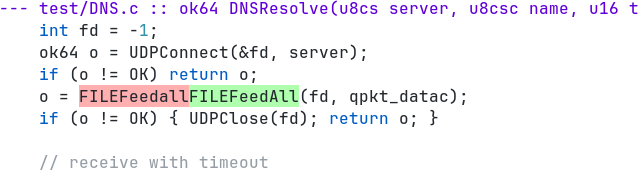
Mine is token based: https://replicated.wiki/blog/img/difflet.png
The set of git tools itself, very much in development: https://github.com/gritzko/git-dogs